



Perceiving Nature(s): Epistemic, Artistic and Political Practices as Contested Fields
Lecture series – Date: 5 June 2025
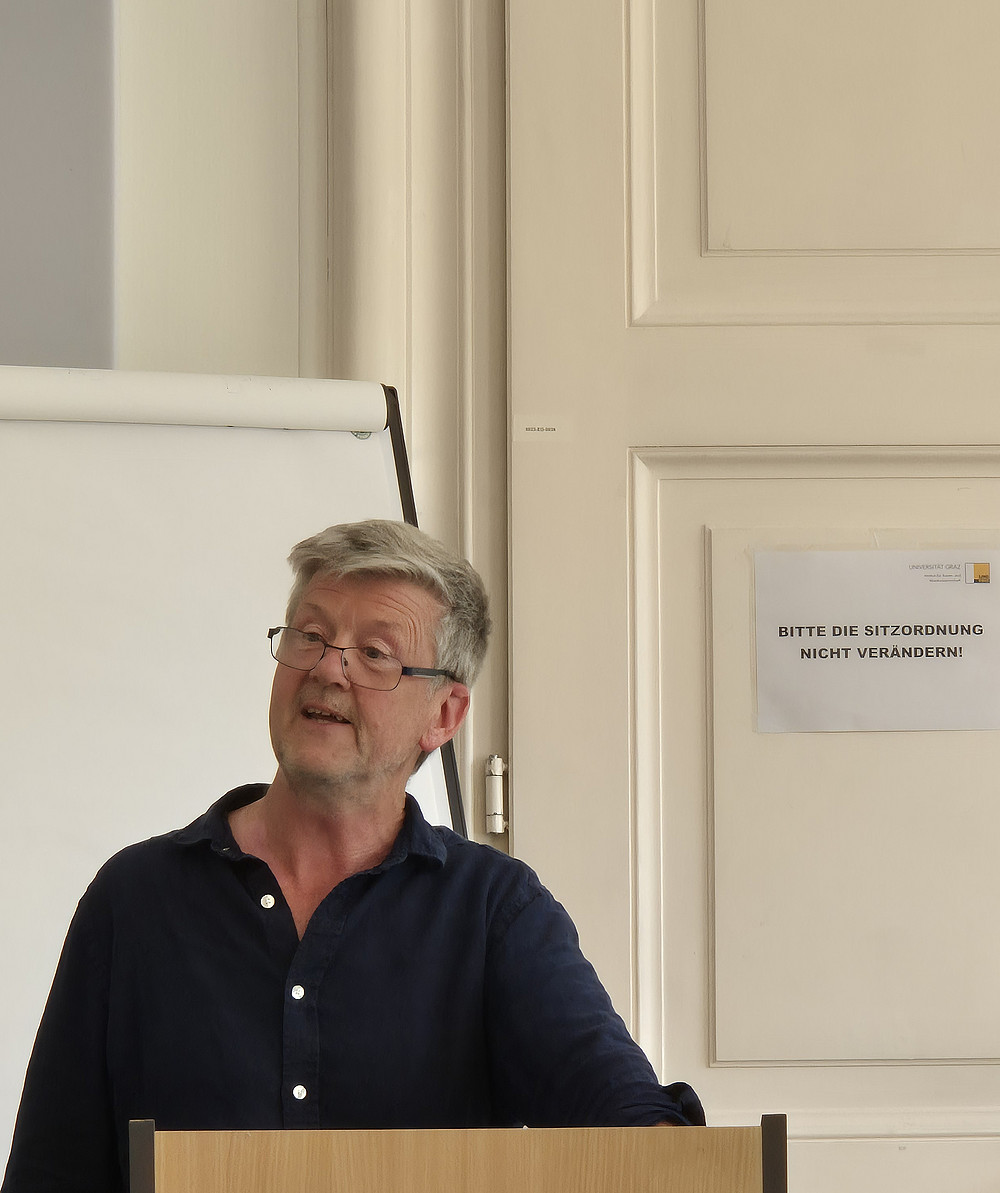
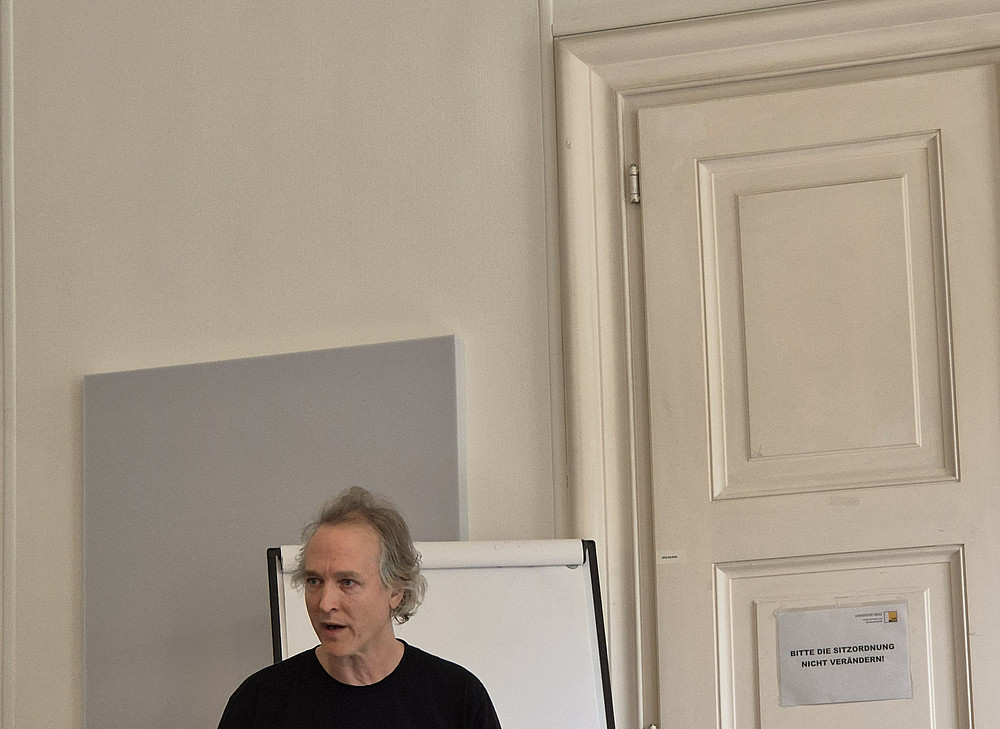
The third event in the lecture series ‘Perceiving Nature(s): Epistemic, Artistic and Political Practices as Contested Fields’ took place on Thursday 5 June, featuring lectures by Professor Julian Johnson (University of London) and Jan von Brevern (University of Weimar).
Julian Johnson is Professor of Music at Royal Holloway, University of London. His publications include numerous works on music and musical aesthetics from the late 18th century to the present day, with a particular focus on the cultural and historical significance of modernist music. His work is consistently shaped by questions of musical meaning and value, which are reflected in his engagement with philosophy, conceptions of nature and landscape, and the relationship between music, literature and the visual arts. What if listening to the world with the same care and attention we devote to music were to reshape our understanding of ourselves? How does listening to music influence us, and what effect does it have on us (ourselves)? In his lecture, Johnson argued, drawing on examples from music and the visual arts, that aesthetics is increasingly being neglected in the fields of philosophy and musicology – with the notion of listening to music as a form of consumption taking centre stage instead. Aesthetic listening resists discursive certainties that seek to categorise knowledge and experience and to divide the language of both philosophy and empirical approaches. Instead, the focus should shift towards listening as a ‘way of being’ – a lived practice with far-reaching and urgent consequences for education, ethics and politics.
(Kopie 1)
Jan von Brevern is a professor of art and cultural history at the Bauhaus University Weimar. He studied art history, philosophy and Romance languages in Hamburg and Berlin. He completed his PhD at ETH Zurich in 2010 and subsequently worked as a research fellow at the Institute of Art History at the Free University of Berlin. There, he obtained his habilitation in 2020 with a thesis on the history of ‘naturalness’. Research visits and fellowships have taken him to institutions including the IFK Vienna, the Getty Research Institute (Los Angeles) and the Bibliotheca Hertziana in Rome. In his lecture, Jan van Brevern explored the question of what contribution the arts and humanities could make to the necessary transformation of agriculture. Whilst life in the 18th century was shaped by solar energy, coal became the dominant energy source in the 19th century. Today, agriculture is undergoing profound change due to monocultures and a lack of biodiversity, which is drastically altering the landscape both in rural and urban areas. The lecture sought to develop cultural-historical perspectives on this problem and to explore the contribution the humanities can make to this discussion. The well-attended lectures by Julian Johnson and Jan van Brevern concluded with lively discussions.